
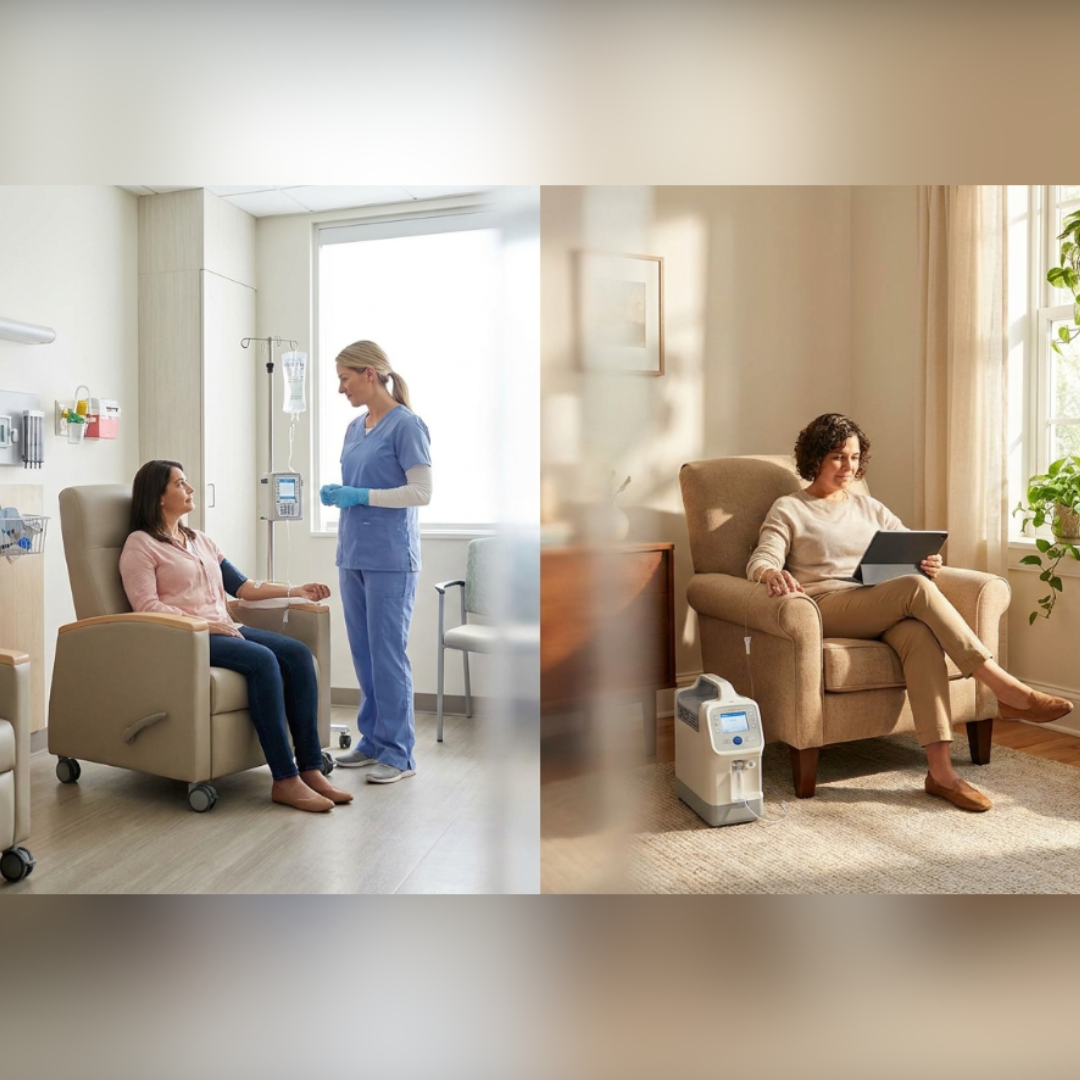
Most patients facing a new infusion prescription ask the same question within the first 24 hours: do I have to go somewhere for this, or can someone come to me? It sounds simple. But the answer involves clinical nuance, insurance logic, medication-specific protocols, and deeply personal lifestyle factors that no single online article ever addresses honestly. This one will.
The choice between an outpatient infusion center and home infusion therapy is not a matter of one option being universally superior. Both settings have earned their place in modern chronic care management. What matters is matching the right setting to the right patient, the right medication, and the right moment in that patient’s treatment journey. The seven dimensions below lay out exactly how these two options compare, ranked from most clinically decisive to most personally driven.
1. Clinical Safety and Emergency Response Capability
Safety is non-negotiable when evaluating any infusion setting, and it is the dimension that most directly determines which patients belong in a clinical environment versus at home. The good news is that both settings have demonstrated strong safety records for the right populations. The critical variable is what happens when something goes wrong.
In most infusion centers, infusion nurses administer medication supervised by a nurse practitioner in a setting that allows for close monitoring. These settings have multiple clinicians and other staff readily available in the event of an adverse reaction, and many facilities have additional emergency support protocols and tools, including defibrillators and anaphylaxis medications, to respond quickly to an escalating medical event. That layered safety net matters enormously for medications carrying a meaningful risk of hypersensitivity reactions, including many biologic therapies used in rheumatoid arthritis, Crohn’s disease, and multiple sclerosis.
Home infusion presents a different picture. In a standard home health setting, a single nurse is assigned to administer the infusion on a particular day. In the event of an adverse reaction, this nurse is responsible for not only managing the patient’s symptoms but also making on-site clinical decisions and escalating care when needed, which may include simultaneously contacting emergency services. This is not a disqualifying limitation for stable, well-established patients, but it is a meaningful consideration for anyone receiving a new biologic for the first time or anyone with a documented history of infusion reactions.
Research comparing adverse event rates across settings is reassuring. As compared to medical-setting infusion patients, home infusion patients were no more likely to experience adverse drug events or side effects. However, this finding applies to patients who were appropriate candidates for home infusion to begin with. The clinical selection process matters as much as the setting itself.
One area where home infusion shows an unexpected safety advantage involves infection exposure. Fewer respiratory infections were reported following home infusions compared to hospital outpatient department infusions, and findings indicate that oncology infusions occurring in the home result in safety outcomes comparable to hospital outpatient departments while producing fewer respiratory infections, which can be life-threatening among oncology patients. For immunocompromised patients, avoiding shared waiting rooms and clinical corridors is not trivial.
The practical guidance here: patients starting a new biologic, those with a history of infusion reactions, those on high-risk protocols, and anyone whose condition is currently unstable should default to a supervised infusion center environment. Protocol requires that patients receive at least their first infusion in a clinical setting, whether infusing subcutaneously or intravenously. Once a patient has established tolerability, transitioning to home infusion may become a legitimate option depending on the medication and physician guidance.
2. Which Therapies Can Actually Be Administered at Home?
The freedom of home infusion is real, but it is not unlimited. Medication-specific requirements, stability profiles, and payer policies all constrain which therapies can legally and practically be delivered in a non-clinical setting. Understanding these boundaries prevents a great deal of confusion during the planning phase.
Many biologic therapies for autoimmune conditions, IVIG for immune deficiencies, iron infusion therapy, antibiotic regimens, and hydration therapy have all been administered successfully in home settings for appropriate patients. Other conditions treated with specialty infusion therapies may include cancers, congestive heart failure, Crohn’s disease, hemophilia, immune deficiencies, multiple sclerosis, rheumatoid arthritis, and more. The technological advances that enabled safe and effective administration of infusion therapies in the home, the desire of patients to resume normal lifestyles, and the cost-effectiveness of home care are important drivers of this model.
However, certain medications require the specific infrastructure of a clinical environment. Therapies with a high rate of acute infusion reactions, medications requiring real-time cardiac monitoring, drugs that need specialized cold-chain management with immediate clinical oversight, and any protocol requiring rapid dose adjustment all belong in a supervised facility. Home infusion is not an appropriate location for all types of medication infusions.
The table below summarizes how common chronic condition therapies map to each setting:
| Therapy Type | Outpatient Infusion Center | Home Infusion | Notes |
|---|---|---|---|
| Biologic infusions (e.g., infliximab, vedolizumab) | ✅ Standard setting | ⚠️ After tolerability established | First infusions typically require clinical supervision |
| IVIG therapy | ✅ Standard setting | ⚠️ Payer-dependent; some HMOs restrict home IVIG | SCIG may have more favorable home coverage |
| Iron infusion therapy | ✅ Preferred for first doses | ⚠️ Limited availability; reaction risk | Clinical monitoring recommended |
| IV antibiotic therapy | ✅ Available | ✅ Common and well-established | One of the most frequent home infusion use cases |
| Hydration therapy | ✅ Available | ✅ Available for appropriate patients | Condition stability is key |
| Oncology-supportive infusions | ✅ Preferred | ⚠️ Select protocols only | Hazardous drug handling requires specific protocols |
| Parenteral nutrition (TPN) | ✅ Available | ✅ Well-established home use | Medicare covers under specific DME criteria |
The physician’s judgment about a patient’s clinical stability, the specific drug’s risk profile, and payer authorization together determine which column a patient lands in. This decision should always involve a direct conversation with the prescribing specialist, not just the insurance coordinator.
3. Insurance Coverage and Out-of-Pocket Cost Reality
Cost is often the factor that tips a patient’s decision, but the financial picture for home infusion therapy versus an outpatient infusion center is more nuanced than most patients expect. The sticker price is only one part of the equation.
The broad pattern is that outpatient infusion centers — particularly freestanding specialty infusion centers rather than hospital outpatient departments — represent a financially efficient middle ground. Hospital outpatient departments were associated with significantly higher costs with no corresponding improvement in quality or safety outcomes when compared with infusions delivered in alternate sites of care. A study found hospital outpatient infusion therapy costs over 40% more, with no improvement in safety, quality, or outcomes versus other care sites. Freestanding centers strip out the hospital facility fee that drives much of that premium, making them a cost-effective choice for most commercially insured patients.
Home infusion also offers genuine cost savings compared to hospital-based care. Home infusion costs were significantly lower than medical-setting infusion costs, with savings between $1,928 and $2,974 per treatment course in research comparing the two. These savings come primarily from the elimination of facility overhead and lower administrative costs.
However, the insurance coverage landscape for home infusion contains significant gaps that patients must understand before making assumptions. Medicare’s fee-for-service program is the only major health plan in the country that does not offer comprehensive coverage for most infusions done in a patient’s home. Medicare beneficiaries enrolled in the fee-for-service program may have coverage for infusion drugs under the Part D benefit, but usually have to pay out of pocket for equipment, supplies, and professional pharmacy and nursing services. This is a significant financial exposure for Medicare patients who assume home infusion will automatically be covered.
The picture is different for Medicare Advantage and commercial payers. About half of the Medicare-age population is enrolled in the Medicare Advantage program, and similar to most commercial health plans, many Medicare Advantage health plans cover home infusion because they recognize it will reduce their overall health care costs and achieve high levels of patient satisfaction.
For patients navigating this landscape, the practical action is to request a benefits investigation before the first infusion appointment. A thorough benefits verification — comparing site-of-care costs, prior authorization requirements, and out-of-pocket maximums — is essential for both settings. Thrivewell Infusion’s insurance coordination team performs this verification as part of the patient onboarding process, ensuring no billing surprises before treatment begins.
4. Quality of Clinical Monitoring During Infusion
The infusion itself is not a passive event. Medications are delivered directly into the bloodstream, meaning that the level of monitoring during the infusion window directly affects how quickly and effectively any complication can be identified and addressed.
In an outpatient infusion center, monitoring is continuous and multi-layered. The infusion nurse correctly identifies the patient for infusion, inserts and monitors IV catheters, collects routine lab specimens, assesses patients throughout the infusion for adverse reactions to the medication, documents medications, vital signs, and side effects in the medical record, and responds appropriately to side effects, adverse reactions, or anaphylaxis during infusion. Critically, these nurses operate within a team environment. If a patient’s condition changes, additional clinical staff are immediately available, and emergency equipment is within arm’s reach.
The importance of real-time monitoring is amplified for patients on biologic therapies. Many monoclonal antibodies and specialty biologics carry an established risk of infusion-related reactions that can range from mild (flushing, headache, chills) to severe (anaphylaxis, hypotension, bronchospasm). Nurses and other healthcare practitioners must recognize the underlying nature of these events for clear identification of patients at risk and for providing optimal prophylactic measures and management of symptoms. A rapid initiation of emergency measures must be taken when any reaction occurs.
In a home setting, the monitoring capability is genuine but structurally different. Home infusion teams receive specialized training and accreditation that includes IV placement, safe drug administration, pump operation, and emergency protocols to ensure the highest standards of patient care. But a single nurse managing a home infusion carries a heavier response burden than a team in a clinical setting, which is why patient selection and medication appropriateness are so important before transitioning care to the home environment.
For patients who have been on a stable biologic regimen for a year or more with zero documented reactions, this monitoring gap is largely theoretical. For patients earlier in their treatment journey, or on medications requiring first-dose observation periods, the clinical team environment provides a meaningful safety buffer that is difficult to replicate at home.
5. Convenience, Scheduling Flexibility, and Quality of Life
For patients managing chronic conditions, infusion therapy is not a one-time event. It is a recurring commitment that may span months or years. This makes convenience and scheduling flexibility genuine clinical considerations, not just lifestyle preferences. Adherence to infusion schedules directly affects therapeutic outcomes, and anything that creates friction in getting to treatment ultimately affects health.
Patients overwhelmingly preferred home infusion, reporting significantly better physical and mental well-being and less disruption of family and personal responsibilities. This preference is understandable. Home infusion eliminates commute time, parking stress, and waiting room waits. For patients with mobility limitations, severe fatigue, or significant travel distances to the nearest infusion center, home delivery removes what can otherwise become a genuine barrier to care.
However, the convenience narrative around home infusion has limits that are rarely acknowledged. Scheduling a home infusion nurse visit depends on nurse availability in the patient’s geographic area, which can vary significantly in rural or suburban markets. Rescheduling a missed infusion at home can introduce delays that affect treatment continuity. The patient’s home environment also must meet basic requirements for safe infusion delivery, including a clean, accessible space and the ability to store medications and supplies properly.
Outpatient infusion centers — particularly modern freestanding facilities designed with patient comfort in mind — have substantially closed the experience gap. Comfortable infusion suites with private or semi-private bays, entertainment options, flexible scheduling including early morning and weekend appointments, and consistent nursing teams that build genuine patient relationships offer a meaningful experience upgrade over traditional hospital outpatient infusion. Many patients find that a well-run infusion center becomes a predictable, even calming, part of their care routine rather than a clinical burden.
Patients who have mobility issues or who live far from medical centers can save time, energy, and travel expenses with home infusion. That said, the quality of the home infusion experience is heavily dependent on the specific home infusion company and nursing staff assigned, introducing more variability than a dedicated infusion center where the physical environment and clinical team are consistent across visits.
6. Care Coordination and Physician Communication
Infusion therapy for chronic conditions rarely exists in isolation. It sits within a larger care ecosystem involving prescribing specialists, primary care physicians, laboratory monitoring, and pharmacy management. How well the infusion setting integrates with that ecosystem affects both safety and therapeutic outcomes.
Outpatient infusion centers typically have structured care coordination infrastructure. Clinical staff maintain direct communication with referring physicians, flag abnormal pre-infusion labs before treatment proceeds, and generate visit summaries that feed back into the patient’s medical record. A review of all prescription and over-the-counter medications and supplements the patient is currently taking is conducted to identify any potential adverse effects and drug reactions, including significant side effects and drug interactions. Lab work — such as electrolyte panels, white blood cell counts, and kidney and liver function — is checked before treatment as applicable. This systematic pre-infusion protocol is easier to execute consistently when the clinical team is working in a structured facility environment.
Home infusion companies also perform care coordination, but the logistics of doing so across a distributed nursing workforce and multiple patient locations introduce additional complexity. Communication between the home infusion nurse, the pharmacy, and the specialist’s office must be carefully orchestrated to maintain the same rigor as a facility-based model. When it works well, it is seamless. When it breaks down, patients can find themselves caught between systems — particularly if a lab result requires a treatment hold or a dose adjustment mid-cycle.
For patients managing complex conditions with multiple co-morbidities, frequent lab monitoring requirements, or medications with narrow therapeutic windows, the integrated clinical environment of a dedicated infusion center tends to offer tighter coordination. Simpler infusion regimens with well-established dosing and stable patients may transition to home infusion with minimal coordination risk.
7. The Decision Framework: Matching Patient Needs to the Right Setting
After examining safety, medication eligibility, insurance, monitoring, convenience, and care coordination, the honest answer is that neither setting is universally superior. The right choice is patient-specific and often evolves over the course of a treatment journey.
The framework below is designed to help patients and their care teams think through the decision systematically. It is not a substitute for a conversation with a prescribing physician, but it organizes the key variables in a way that makes that conversation more productive.
| Patient Scenario | Recommended Setting | Key Reason |
|---|---|---|
| Starting a new biologic for the first time | ✅ Outpatient infusion center | First-dose observation and reaction management require team support |
| Stable on biologic for 12+ months, no reactions | ⚠️ Either setting possible | Physician and payer approval required; both settings viable |
| Medicare fee-for-service patient | ✅ Outpatient infusion center | Home infusion coverage gaps create significant out-of-pocket risk |
| Immunocompromised patient concerned about infection exposure | ⚠️ Evaluate both; freestanding center preferred over hospital setting | Freestanding centers reduce hospital-acquired infection exposure vs. HOPDs |
| Patient with significant mobility limitations or rural location | ⚠️ Home infusion if medication appropriate | Access barriers make home delivery the most adherence-supportive option |
| Patient on IVIG with commercial insurance | ⚠️ Verify payer policy; either may apply | Some HMOs restrict home IVIG; benefits investigation essential |
| Complex multi-drug regimen with frequent lab monitoring | ✅ Outpatient infusion center | Integrated lab review, physician coordination, and team oversight reduce risk |
| IV antibiotic course for stable outpatient infection | ✅ Home infusion well-established | Well-documented safety and cost-effectiveness in this indication |
The most important principle within this framework is that the decision is not permanent. Many patients begin in an outpatient infusion center and transition to home infusion as their condition stabilizes and their medication tolerability is established. Others start at home and return to a center if their health status changes. The best infusion therapy option is the one that keeps the patient safe, adherent, and as comfortable as possible at each stage of their journey.
For patients seeking a freestanding outpatient infusion center that combines clinical rigor with a genuinely welcoming patient environment, the National Home Infusion Association’s site of care resources provide useful background on what to ask when evaluating any infusion provider. Understanding the quality and cost outcomes data by site of care also helps patients and families have more informed conversations with both their physicians and their insurance coordinators before committing to a setting.
Frequently Asked Questions About Infusion Center vs. Home Infusion
Is home infusion therapy as safe as receiving infusions at an outpatient center?
For patients who are appropriate candidates, the safety record of home infusion is strong. Research has found that home infusion care can provide safe, clinically effective care, improve quality of life, and reduce overall healthcare costs, with patients receiving home infusions no more likely to experience adverse drug events or side effects than those treated in medical settings. The key qualifier is appropriate candidacy, which depends on the medication, the patient’s history of reactions, and their overall clinical stability.
What is the main safety advantage of an outpatient infusion center?
Infusion therapy centers are staffed with experienced healthcare professionals, including registered nurses trained in IV therapy, on-site physicians or nurse practitioners, and pharmacists specializing in infusion medications. This team structure means that if a reaction occurs, multiple trained clinicians can respond simultaneously rather than placing the entire burden on a single nurse.
Does Medicare cover home infusion therapy?
Medicare’s fee-for-service program is the only major health plan in the country that does not offer comprehensive coverage for most infusions done in a patient’s home. Medicare Advantage and most commercial plans have broader home infusion coverage. Patients should always verify their specific plan benefits before assuming coverage applies.
Can I switch from an infusion center to home infusion after my treatment is established?
Yes, many patients transition from a clinical infusion center to home infusion once their tolerability to a medication is established and their physician approves the change. This decision requires physician authorization, payer approval, and a home infusion company that can support the specific medication. The transition should always be guided by the prescribing specialist rather than initiated independently by the patient.
What chronic conditions most commonly require ongoing infusion therapy?
Conditions treated with specialty infusion therapies include cancers, congestive heart failure, Crohn’s disease, hemophilia, immune deficiencies, multiple sclerosis, and rheumatoid arthritis. Iron deficiency anemia, certain autoimmune disorders, and primary immunodeficiency diseases are also among the most common diagnoses that require regular infusion management.
Are freestanding infusion centers less expensive than hospital outpatient infusion departments?
Consistently, yes. A large study of more than 52,000 infusions found that hospital outpatient departments had about 42 percent higher costs compared to care given in places like the home, infusion centers, or physician offices. Freestanding centers eliminate hospital facility fees while maintaining the same clinical standards, which is why payers increasingly steer patients toward these settings.
What should I look for when choosing an outpatient infusion center?
Key factors include the nurse-to-patient ratio (lower is better for both safety and experience), the physical environment of the infusion suite, the center’s experience with your specific medication and condition, how the center communicates with your prescribing physician, and whether the center accepts your insurance plan and performs benefits verification before your first appointment. The quality of care coordination between the infusion center and your specialist’s office is often the most underrated factor in long-term treatment satisfaction.
Can all biologic infusions be given at home?
Not all biologic infusions are appropriate for home delivery. Protocol requires that patients receive at least their first infusion in a clinical setting. After tolerability is established, some biologics may be transitioned to home infusion depending on the specific drug’s risk profile, the payer’s site-of-care policy, and the physician’s clinical judgment. High-risk biologics with significant hypersensitivity profiles typically remain in supervised clinical settings throughout the treatment course.
Does receiving infusions at home affect treatment outcomes?
Clinical outcomes in home infusion were as good as or better than in medical-setting infusion, with some patient populations showing measurably improved results. Treatment adherence — a key driver of outcomes in chronic disease management — is often supported by home infusion’s convenience. However, outcomes depend significantly on the patient’s engagement, caregiver support, and the quality of the home infusion nursing team.
How do I know which infusion setting is right for my condition?
The decision should be made collaboratively between the patient, the prescribing specialist, and the infusion provider. Factors to evaluate include the specific medication’s risk profile, the patient’s insurance coverage, their geographic access to a quality infusion center, their clinical stability, and their personal preferences around convenience versus supervised care. This conversation is best initiated at the time of the infusion prescription, not after the first appointment has already been scheduled.
What happens if I have a reaction during a home infusion?
The home infusion nurse is trained to manage infusion reactions and carries emergency medications and protocols. However, the nurse will be working without the immediate backup of additional clinical staff. If the reaction escalates, emergency services must be contacted. This is why patients with a history of infusion reactions, those on new medications, or those on high-risk protocols are generally advised to receive treatment in a supervised infusion center where team-based emergency response is immediately available.
Is the experience at a freestanding infusion center very different from a hospital infusion department?
Often, significantly so. Hospital outpatient infusion departments operate within the broader complexity of a hospital environment, with shared resources, less predictable wait times, and a clinical atmosphere that many patients find stressful. Freestanding specialty infusion centers are purpose-built for the infusion experience, with dedicated nursing teams, designed patient environments, and a workflow focused entirely on the infusion patient. Many patients describe the difference as substantial, particularly those who have experienced both settings.
Key Takeaways: Outpatient Infusion Center vs. Home Infusion Therapy
- Safety profiles are comparable for appropriate patients, but outpatient infusion centers offer superior emergency response infrastructure for high-risk medications and new biologic starts.
- Not every medication can be administered at home. Medication-specific protocols, reaction risk profiles, and payer policies all determine eligibility for home infusion.
- Medicare fee-for-service patients face significant coverage gaps for home infusion, making a freestanding outpatient infusion center the financially safer default for this population.
- Freestanding outpatient infusion centers eliminate hospital facility fees while maintaining clinical excellence, making them the most cost-effective supervised setting for most commercially insured patients.
- Home infusion excels on convenience and quality of life for stable patients on established regimens with supportive home environments and home-infusion-friendly insurance plans.
- The setting decision should evolve with the patient. Starting in a supervised infusion center and transitioning to home infusion as stability is established is a common and clinically sound path for many chronic condition patients.
- Always request a benefits investigation before your first infusion. The financial implications of site-of-care choice are significant, and surprises after treatment begins are avoidable with proper pre-authorization and cost transparency.
- Care coordination quality matters as much as the setting itself. The best infusion provider — whether at a center or at home — is one that communicates proactively with your prescribing physician and keeps your entire care team informed.